Can you really see Rome in one day?
You certainly won’t see all of it — Rome has spent more than two millennia making sure of that — but 24 hours is enough to experience an extraordinary cross-section of the Eternal City.
With a little forward planning, a day in Rome can take you from the gladiatorial drama of the Colosseum to the fountains and piazzas of the historic centre, across the Tiber to Vatican City and, finally, to dinner among the atmospheric lanes of Trastevere.
The secret is not to attempt everything. Rome rewards curiosity, but it also rewards those who occasionally stop walking, order an espresso and simply watch the city go by.
Here’s how to spend one unforgettable day in Rome.
What is the best way to spend one day in Rome?
For a first visit, concentrate on four areas: Ancient Rome in the morning, the historic centre in the afternoon, Vatican City later in the day and Trastevere in the evening.
A well-planned route can include:
The Colosseum
Roman Forum and Palatine Hill
Trevi Fountain
Spanish Steps
Pantheon
Piazza Navona
St Peter’s Basilica
Trastevere
The River Tiber
It is an ambitious day, so advance tickets and comfortable walking shoes are essential. If you prefer travelling at a gentler pace, drop one or two sights rather than racing between them.
Morning: Step Back in Time at the Colosseum
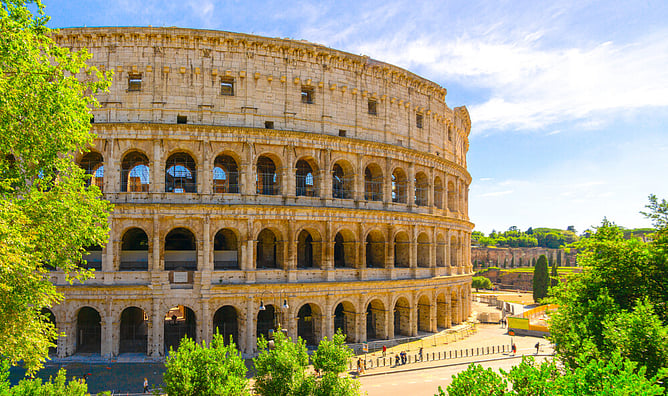
There are few better introductions to Rome than emerging from the city streets to find the Colosseum rising ahead of you.
Almost 2,000 years old, this enormous amphitheatre once hosted gladiatorial contests and public spectacles watched by tens of thousands of Romans. Today, it remains one of Europe's most recognisable monuments — and one of Rome's busiest.
An early start is worthwhile. Pre-book your timed admission before travelling and allow enough time to appreciate the building rather than treating it as somewhere to tick off a list.
Some ticket and tour options include additional areas of the monument, so check exactly what is included when booking.
How long should you spend at the Colosseum?
For a one-day Rome itinerary, allow around 60–90 minutes for the Colosseum itself. Those with a particular interest in Roman history could easily spend longer.
Explore the Roman Forum and Palatine Hill
From the Colosseum, continue into the Roman Forum and Palatine Hill.
The Forum requires a little imagination, but give it time and ancient Rome begins to reveal itself. These ruins were once part of the city's political, commercial and religious heart, filled with temples, public buildings and monuments.
Above it lies Palatine Hill, traditionally regarded as the birthplace of Rome and later one of its most prestigious addresses. The elevated position also provides some wonderful views across the Forum.
It is worth lingering here for a moment. Rome can be wonderfully chaotic at street level; from the Palatine, the city suddenly feels rather more contemplative.
Lunch: Eat Like a Roman
By lunchtime, sightseeing should give way to one of Rome's other great pleasures: eating.
Look beyond restaurants immediately beside the biggest attractions and seek out a traditional trattoria. Roman cooking is famously uncomplicated, relying on excellent ingredients and recipes perfected over generations.
Classic dishes to look for include cacio e pepe, with Pecorino Romano and black pepper, and carbonara, traditionally prepared with egg, cheese, guanciale and pepper.
For something quicker, try a supplì — a crisp, fried rice snack typically filled with tomato rice and melting mozzarella. It is wonderfully Roman and particularly useful when there is still plenty of sightseeing ahead.
Afternoon: Walk Through Rome's Historic Centre
The joy of central Rome is that many of its celebrated landmarks can be discovered on foot.
The journey between them is part of the experience. Look into courtyards, notice fountains tucked into small squares and allow yourself the occasional detour. Some of Rome's most memorable moments happen between the famous sights.
Is the Trevi Fountain worth visiting?
Yes. The Trevi Fountain attracts large crowds, but its theatrical beauty makes it worth seeing, particularly on a first visit.
Fed by an ancient Roman aqueduct, the monumental Baroque fountain is considerably more impressive in person than photographs suggest.
Tradition says that throwing a coin into the fountain ensures a return to Rome. Whether or not you believe the legend, after a few hours in the city you may find yourself hoping it is true.
Continue to the Spanish Steps
From Trevi, walk towards the Spanish Steps and Piazza di Spagna.
This has been one of Rome's great meeting places for centuries, framed by elegant streets and historic buildings. Rather than rushing through, take a little time to explore the surrounding neighbourhood and enjoy the view towards the steps and the church of Trinità dei Monti above.
It is also worth remembering that Rome's historic monuments are protected, and visitor rules around sitting, eating and drinking at major sites can be strictly enforced.
Step Inside the Pantheon
Next comes one of ancient Rome's greatest architectural achievements: the Pantheon.
Its exterior gives only a hint of what awaits inside. Enter and your attention is immediately drawn upwards towards the vast concrete dome and its central oculus, the circular opening through which daylight enters the building.
Nearly two thousand years after its construction, the engineering remains astonishing.
The Pantheon is an active church as well as a historic monument, and admission arrangements can change, so it is sensible to check current opening times and ticket requirements before your trip.
Slow Down in Piazza Navona
A short walk leads to Piazza Navona, one of Rome's most beautiful public spaces.
Its elongated shape follows the footprint of an ancient Roman stadium, although today the piazza is celebrated for its Baroque architecture and fountains, including Bernini's magnificent Fountain of the Four Rivers.
This is a good point to slow the pace.
Order a coffee nearby, find a good gelateria or simply watch Roman life unfold around the square. A successful day in Rome should contain at least a little time in which absolutely nothing is scheduled.
Late Afternoon: Cross the Tiber to Vatican City
From Piazza Navona, head west towards the River Tiber and Vatican City.
At the heart of the world's smallest independent state stands St Peter's Basilica, one of Christianity's most important churches and among the great architectural experiences of Europe.
Even visitors with no religious affiliation are likely to be struck by its extraordinary scale, art and craftsmanship.
Is St Peter's Basilica free to visit?
General entry to St Peter's Basilica is normally free, although security queues can be considerable. Certain experiences, including access to the dome, require a separate ticket.
Opening arrangements can be affected by religious services, papal events and other occasions, so always check the latest visitor information before travelling.
Can you visit the Vatican Museums if you only have one day in Rome?
You can, but there is a significant trade-off.
The Vatican Museums and Sistine Chapel deserve several hours rather than a hurried dash. Trying to combine them with the Colosseum, Forum, historic centre and St Peter's Basilica makes for an exceptionally packed day.
If seeing Michelangelo's Sistine Chapel is one of your main reasons for visiting Rome, make it a priority and remove some of the afternoon sights from this itinerary. Book Vatican Museums admission well in advance, particularly during busy periods.
Evening: Dinner in Trastevere
When the sightseeing is finished, cross back towards Trastevere.
This characterful neighbourhood on the western bank of the Tiber feels made for evenings. Narrow lanes wind between ochre-coloured buildings, tables spill onto pavements and small piazzas gradually fill as aperitivo turns into dinner.
Trastevere's popularity means its busiest streets can be very lively, so explore beyond the obvious thoroughfares when choosing somewhere to eat.
Look for Roman favourites such as amatriciana, gricia, saltimbocca or seasonal Roman-style artichokes, followed — naturally — by gelato.
After a day spent counting monuments, dinner is the moment to stop looking at the clock.
Finish Your Day Beside the Tiber
Rome after dark is different from Rome during the day.
Take a final walk beside the River Tiber, or cross one of its historic bridges and watch the illuminated city unfold around you. The domes, church façades and riverside buildings take on a softer character after sunset.
It is a fitting conclusion to 24 hours in a city that rarely needs much help creating a sense of occasion.
Is One Day in Rome Enough?
One day is enough to see several of Rome's most famous sights, but not enough to experience the entire city. First-time visitors who can spare three or four days will have a far more relaxed experience.
If 24 hours is all you have, prioritise the Colosseum and Ancient Rome, walk through the historic centre and choose between a more extensive Vatican visit or a leisurely evening in Trastevere.
Most importantly, resist the temptation to turn Rome into a race.
The Eternal City has been here for thousands of years. It can wait while you have another coffee.
One-Day Rome Itinerary at a Glance
Morning: Colosseum → Roman Forum → Palatine Hill
Lunch: Traditional Roman trattoria or supplì on the go
Afternoon: Trevi Fountain → Spanish Steps → Pantheon → Piazza Navona
Late afternoon: St Peter's Basilica and Vatican City
Evening: Trastevere for dinner → stroll beside the River Tiber
Frequently Asked Questions About Visiting Rome for One Day
What should I book in advance for one day in Rome?
Prioritise advance reservations for attractions with timed or limited admission, particularly the Colosseum and, if you intend to visit, the Vatican Museums. Check official visitor information shortly before travelling, as admission procedures and opening hours can change.
Is Rome easy to explore on foot?
Central Rome is wonderfully rewarding to explore on foot, and many of the attractions in this itinerary are within walking distance of one another. However, the complete route covers a considerable distance. Comfortable shoes are essential, and using public transport or a taxi for one section can save valuable time.
What food should I try during a day in Rome?
For a taste of traditional Roman cooking, look for carbonara, cacio e pepe, amatriciana or gricia. Try supplì for a quick snack and leave room for a proper Italian gelato.
When is the best time to visit Rome?
Spring and autumn are particularly appealing for sightseeing, with generally pleasant temperatures, although Rome remains popular for much of the year. Summer can be very hot and busy, making early starts and regular breaks particularly important.
Should I take a guided tour in Rome?
A good guide can transform ruins into stories, particularly at the Colosseum and Roman Forum. For first-time visitors with limited time, a well-organised guided experience can also make navigating the major archaeological sites considerably easier.
Ready to Experience Rome for Yourself?
Reading about Rome is one thing. Standing beneath the Colosseum, hearing the fountains in a centuries-old piazza and sitting down to a bowl of pasta as evening falls over Trastevere is quite another.
Whether you're planning a romantic weekend, a spontaneous escape or adding Rome to a longer Italian adventure, JLM Travel can help you find the right European city break and turn those plans into a holiday.
Call JLM Travel on 0191 432 6230, search on our website or pop in to one of our branches to explore our latest Rome and European city-break options.